Quick answer: Making Tax Digital for VAT applies to all VAT-registered UK businesses, whatever their turnover. You must keep digital VAT records and send returns to HMRC through compatible software. The £90,000 figure is the registration threshold, not a limit for this scheme.
Who must follow Making Tax Digital for VAT
The scheme began for businesses above the VAT threshold in April 2019 and covered every VAT-registered business from April 2022. Registering voluntarily below the threshold does not exempt you. See the UK VAT registration threshold for the current limit.
What Making Tax Digital for VAT requires
- Keep VAT records digitally: sales, purchases and VAT amounts.
- Use software that connects to HMRC to submit returns. Spreadsheets work with bridging software.
- Keep a digital link between systems. Copying and pasting between them does not count.
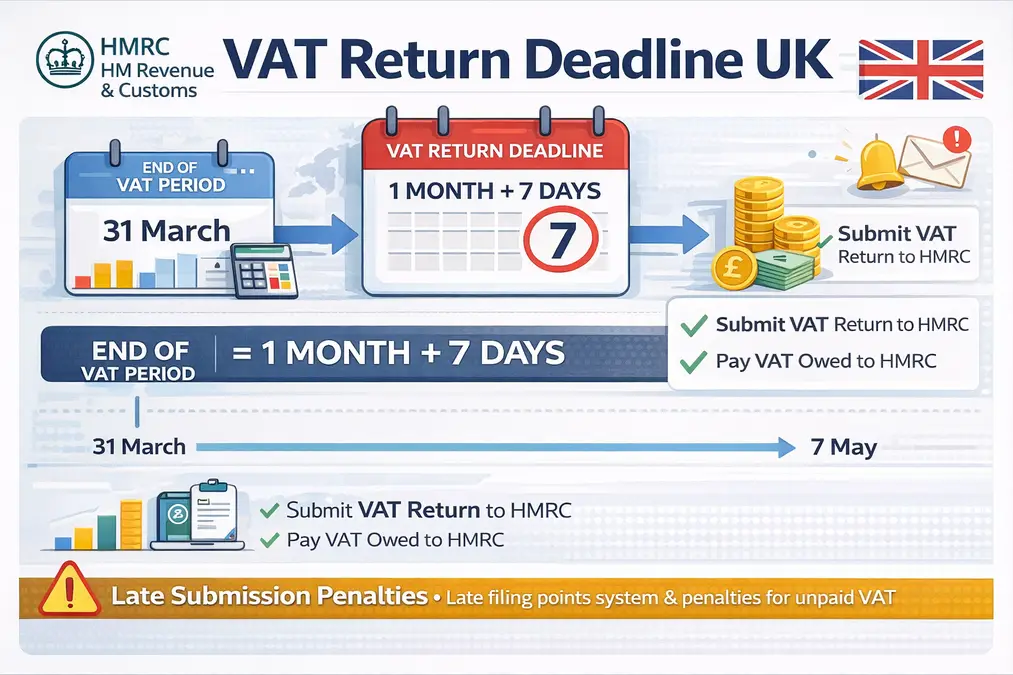
- Submit each return by the deadline (see VAT return deadlines).
Making Tax Digital for VAT penalties
Late returns earn penalty points. Once you reach the points limit for your filing frequency, a fixed penalty applies. Late payment is charged separately and carries interest. Exact figures are on GOV.UK.
MTD for Income Tax is a separate scheme
Making Tax Digital for Income Tax Self Assessment covers sole traders and landlords and is phased in from April 2026 by income level. It does not replace the VAT scheme. Check the current phasing on GOV.UK.
How to get started with Making Tax Digital for VAT
- Check you are signed up on the HMRC sign-up page.
- Choose software and connect it to HMRC.
- Build a monthly routine for small business VAT records (see UK VAT for small businesses) and check amounts with the UK VAT calculator.
Making Tax Digital for VAT questions
Does Making Tax Digital for VAT apply below £90,000?
Only if you are VAT-registered, including voluntary registration.
Can I use a spreadsheet?
Yes, if bridging software links it to HMRC and the records stay digital.