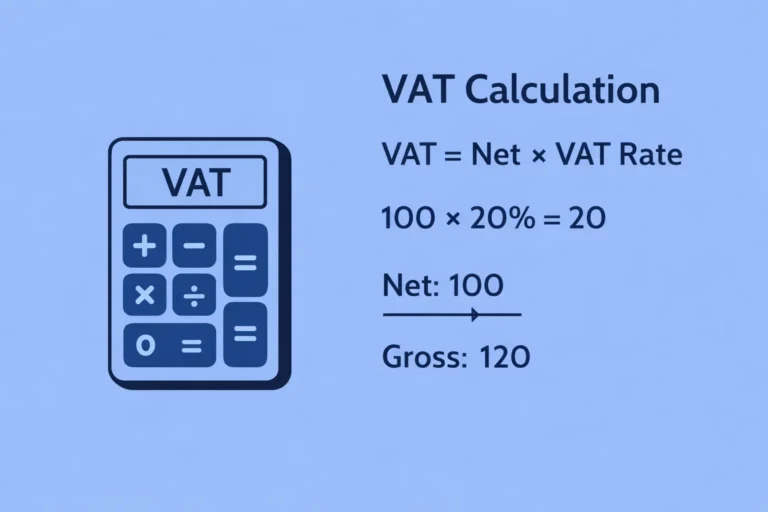
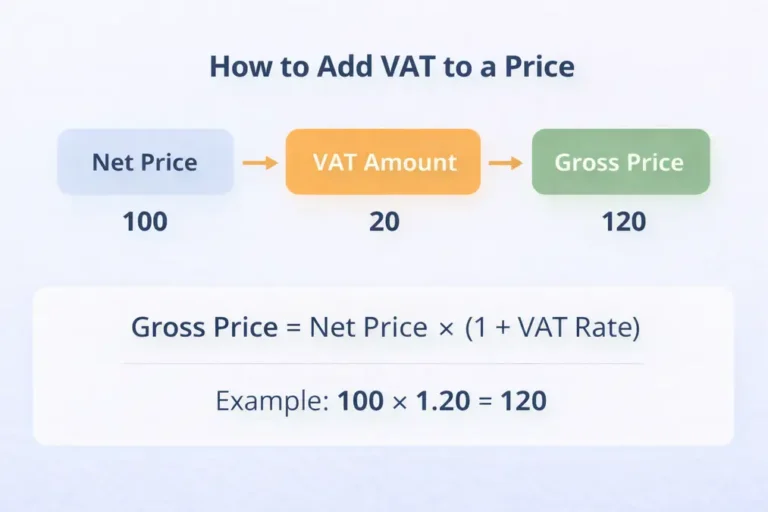
Quick answer: What does VAT registered mean? It means a business is registered with HMRC to charge VAT on its taxable sales, has a VAT number, files VAT returns and can reclaim the VAT it pays on purchases. A UK business must register once its taxable turnover passes £90,000 in any rolling 12 months, and can register voluntarily below that.
What does VAT registered mean?
A VAT registered business has applied to HMRC and been given a VAT registration number. From the date it is registered, it must:
- charge VAT at the correct rate (20%, 5% or 0%) on its taxable goods and services
- show its VAT number and the VAT amount on every VAT invoice
- keep digital VAT records and file VAT returns, usually every quarter
- pay HMRC the VAT it has charged, minus the VAT it has paid on business purchases
A UK VAT number has 9 digits and is usually written with a GB prefix. When you see “VAT registered” on an invoice or website, it means the seller has one of these numbers.
When does a business have to be VAT registered?
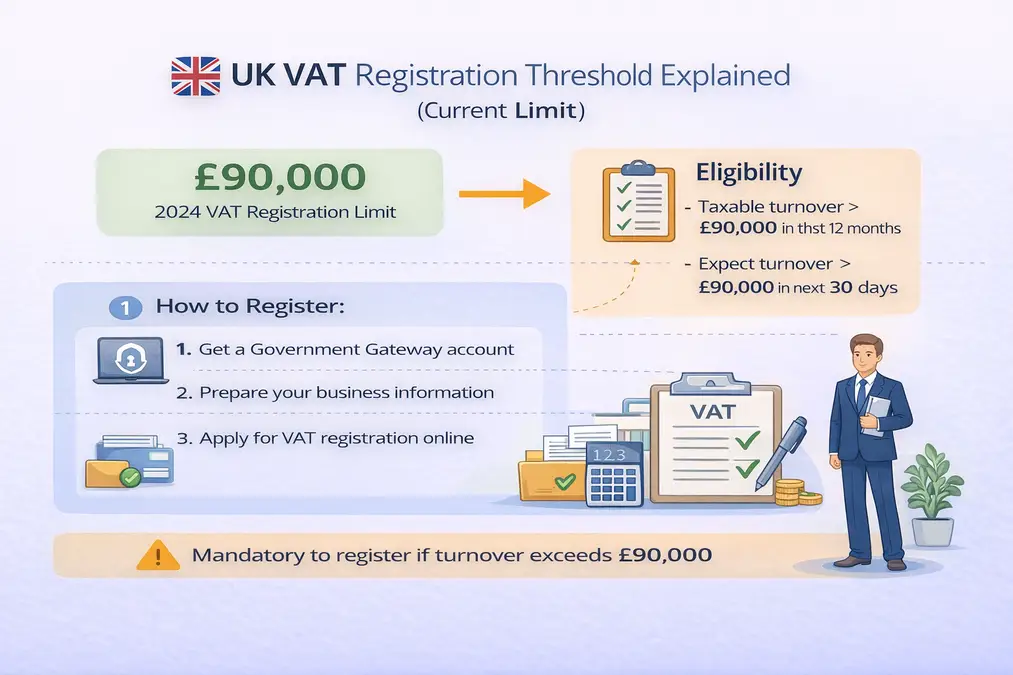
Registration is compulsory when taxable turnover goes over £90,000 in any rolling 12-month period, or when the business expects to pass £90,000 in the next 30 days alone. Zero-rated sales count towards the limit and exempt sales do not. The business can apply to deregister when its turnover falls below £88,000. See the full rules in the UK VAT registration threshold guide and on GOV.UK.
What does it mean for a customer if a company is VAT registered?
For a consumer, it usually means the price includes VAT, normally 20%. For another VAT registered business, it means the VAT on the invoice can often be reclaimed. A valid VAT invoice should show the seller’s VAT number. You can check any UK number with the HMRC VAT number checker.
Example of how a VAT registered business works
A VAT registered shop sells goods for £100,000 plus VAT and pays £30,000 plus VAT to its suppliers. It has charged £20,000 of VAT (output VAT) and paid £6,000 (input VAT). On its return it pays HMRC the difference of £14,000.
Benefits and drawbacks of being VAT registered
| Benefits | Drawbacks |
|---|---|
| Reclaim VAT on business purchases | Must charge VAT on taxable sales, which can raise prices for consumers |
| Looks established to other businesses | Extra record keeping and quarterly returns |
| Easier to sell to other VAT registered businesses | Penalties for late returns or late payment |
Can a business be VAT registered below £90,000?
Yes. Voluntary registration is allowed at any turnover. Businesses that buy a lot of VAT-bearing stock or equipment, or that sell mostly to VAT registered customers, often choose it. Read UK VAT for small businesses to compare the options, and the VAT accounting schemes for ways to simplify returns.
What does not VAT registered mean?
A business that is not VAT registered does not charge VAT, cannot show a VAT number and cannot reclaim VAT on its purchases. Its prices are not “plus VAT”. If you see “VAT not applicable”, the seller is below the threshold or exempt.
Questions about VAT registered meaning
Do VAT registered businesses pay VAT?
They pay HMRC the difference between the VAT they charge and the VAT they pay on purchases. The customer bears the VAT in the price.
What does VAT registered mean on an invoice?
The seller is registered with HMRC and the invoice should show the VAT number, the VAT rate and the VAT amount. To work out the amounts use the UK VAT calculator and see inc VAT and ex VAT meaning.